Fereydun and his three sons
From the Shahnameh of Ferdowsi, in seven chapters.
Every painted card in the game is someone, or something, from this one story. The game tells it a chapter at a time, between rounds. Here it is all in one place, told to the end.
One. The child and the cow
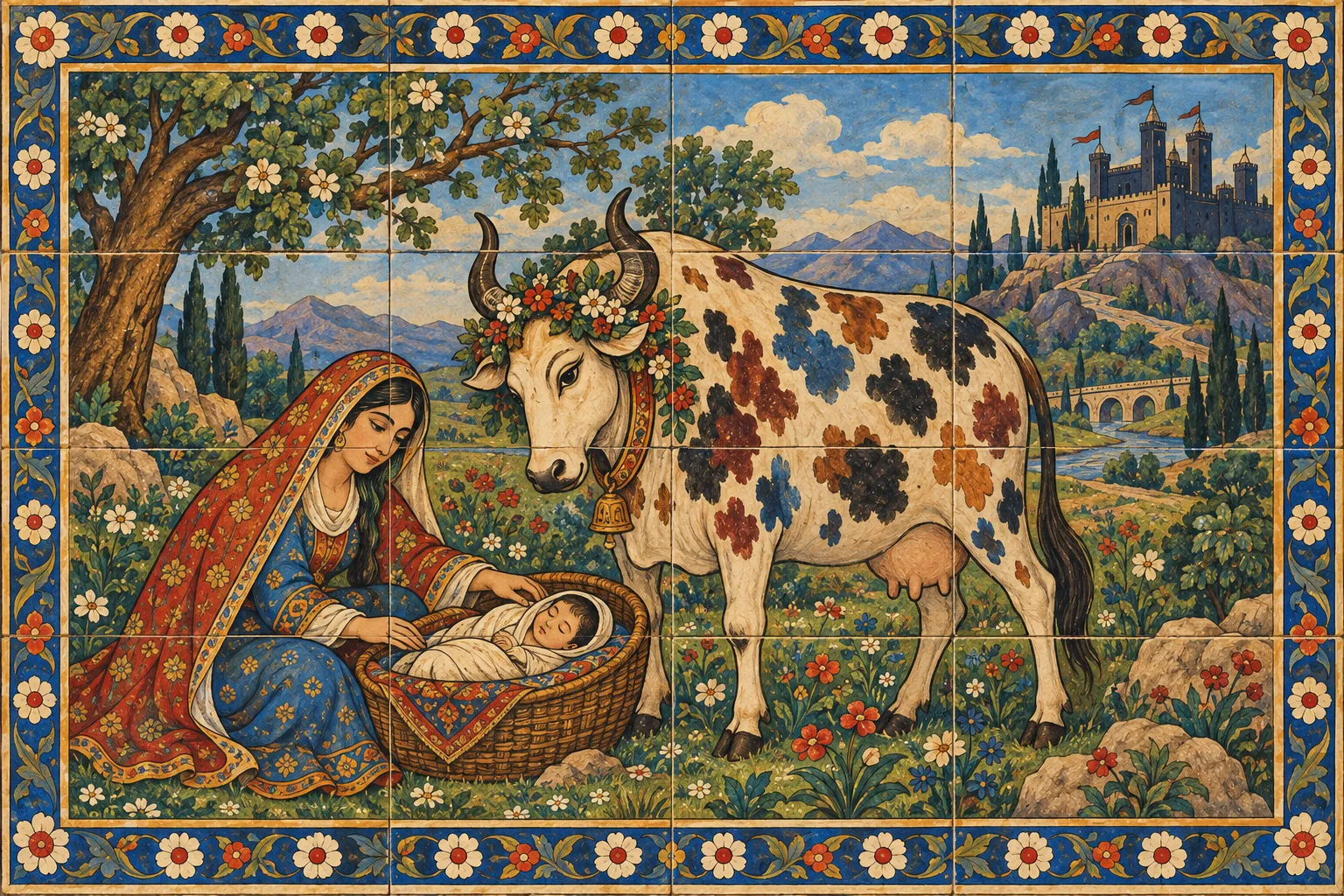
Zahhak had ruled for a thousand years. A snake grew from each of his shoulders, and the snakes were fed on the brains of young men. One night he dreamed of a boy who would pull him from his throne, and he sent men out to find the child.
The child was Fereydun. Zahhak's men had already killed his father. His mother, Faranak, carried him to a meadow and left him with its keeper, beside a cow named Barmayeh whose coat shone with every colour. For three years the cow's milk fed him. Then Faranak took him further away, up into the Alborz mountains.
Two. The blacksmith's apron
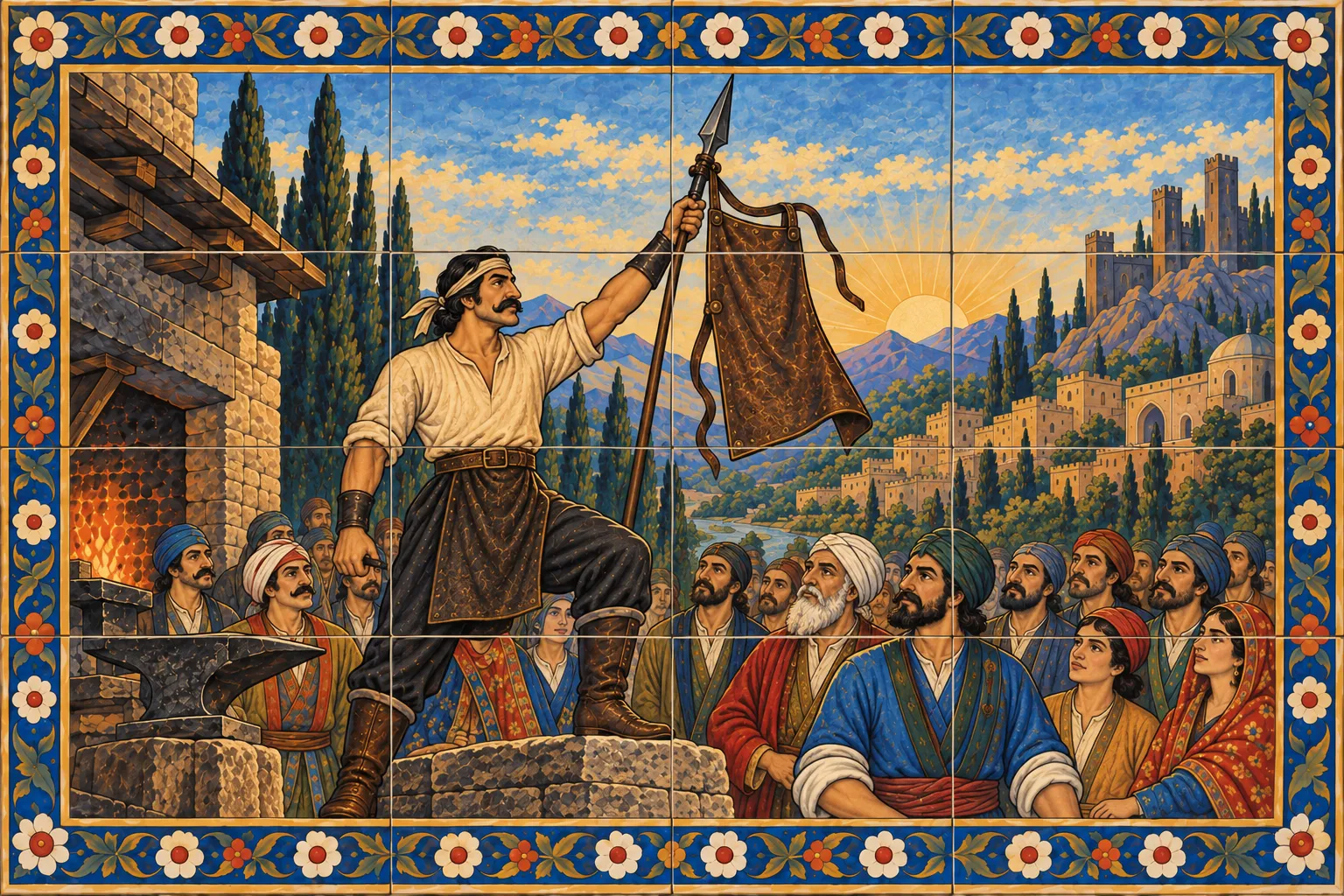
In the city lived a blacksmith, Kaveh, who had lost one son after another to the snakes. When Zahhak's men came for the last, he walked into the court and said what no one else dared to say. Then he tore up the paper the king wanted the elders to sign.
He went out to the square, tied his leather apron to the tip of a spear and called on the city to follow it. The city did, all the way to Fereydun. Fereydun covered the apron in gold and jewels. It became the Kaviani banner, and from then on it was carried before the kings of Iran.
Three. The chains of Damavand
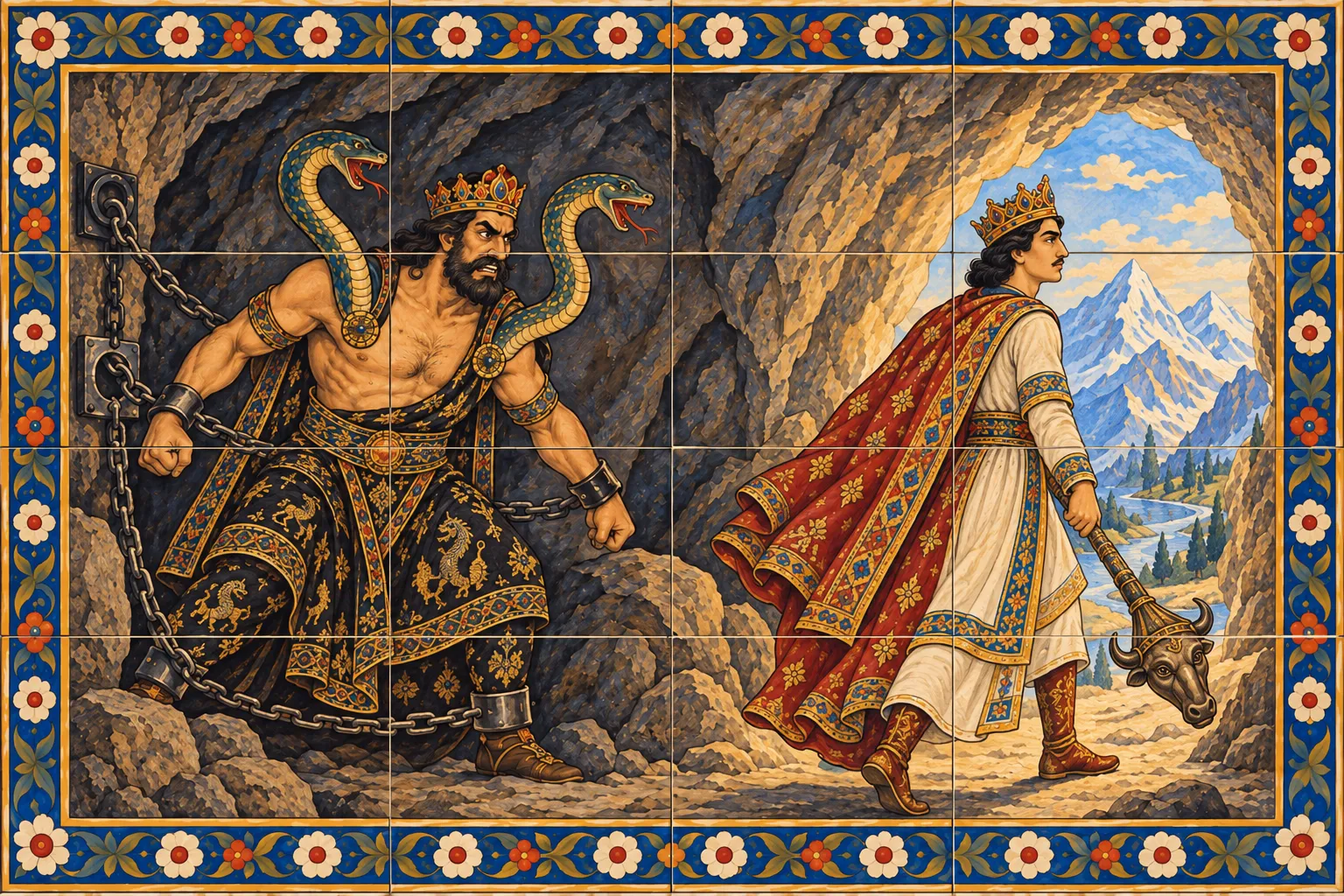
The smiths forged Fereydun a mace with the head of an ox, in memory of the cow that had raised him. Zahhak had killed her. Fereydun crossed the great river with the city behind him and walked into the tyrant's palace.
He did not kill Zahhak. A voice told him the time had not yet come. He bound the tyrant in chains and shut him inside Mount Damavand, and the old stories say he is there still. Then Fereydun sat on the throne, and the world was at peace.
Four. The dragon on the road
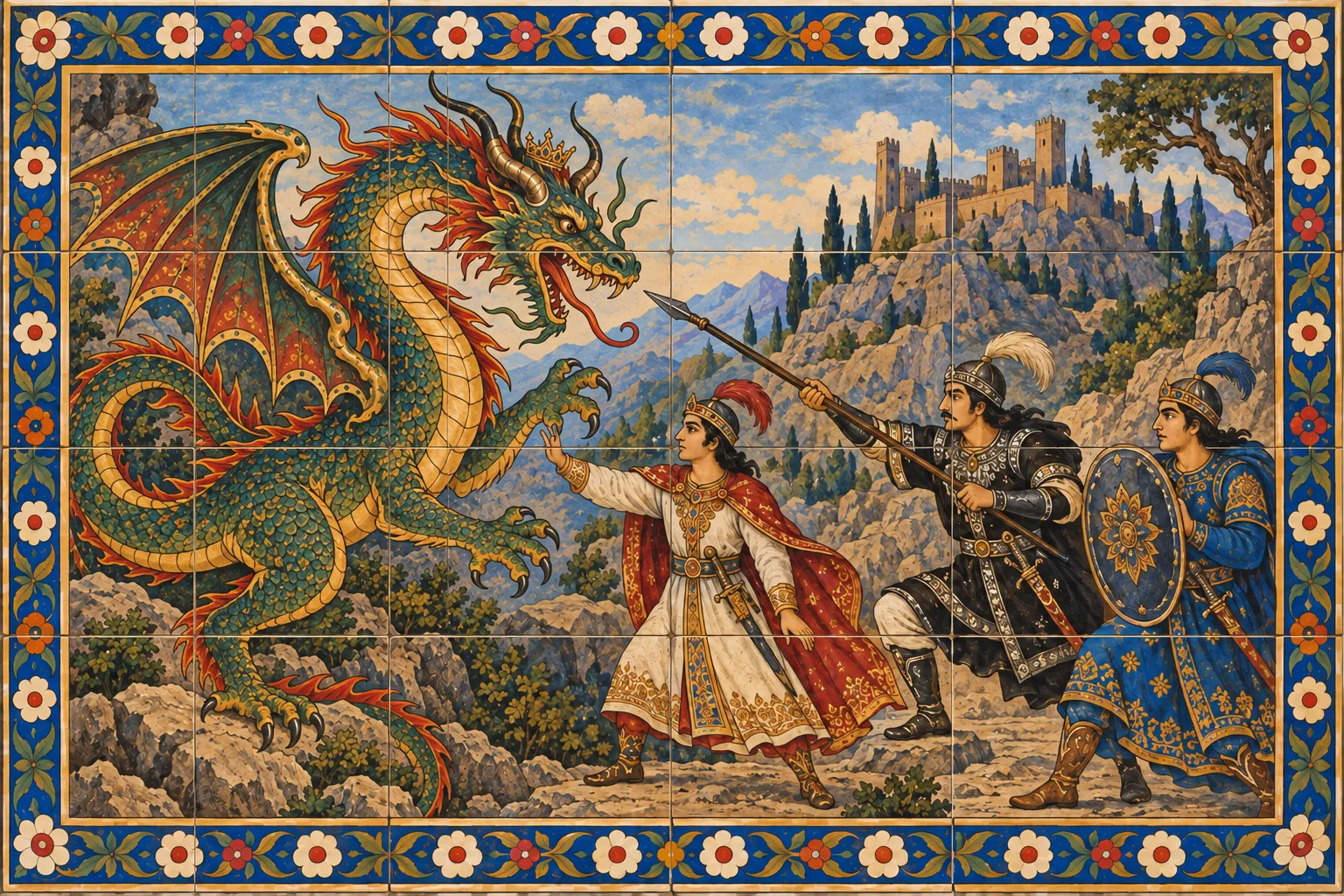
Fereydun had three sons, and for a long time they had no names. He found them three sisters to marry, the daughters of the king of Yemen. On the road home he tested his sons by coming at them in the shape of a dragon.
The eldest stepped back and said that no wise man fights a dragon. The second drew his bow and charged. The youngest stood where he was. He told the dragon whose sons they were, and that it would do well to leave. So Fereydun gave them their names. The careful one he called Salm, the fierce one Tur, and the one with both courage and sense, Iraj. He named their brides as well: Arezu, Mah and Sahi.
Five. The world divided
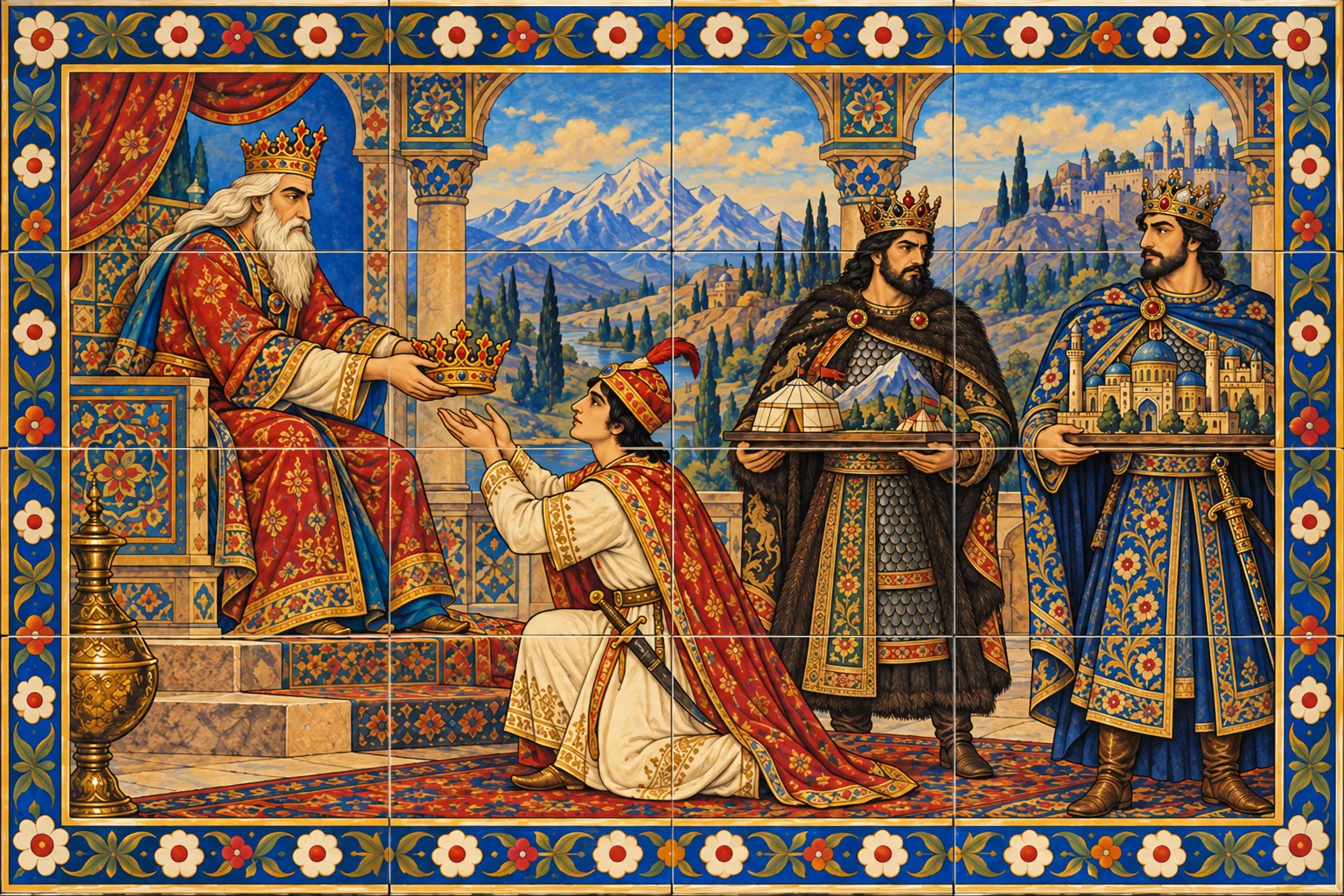
In his old age Fereydun divided the world in three. He gave Salm the west, the land of Rum. He gave Tur the east, Turan and China. To Iraj, the youngest, he gave Iran, the centre of the world, and with it the throne and the crown.
Each son went to his own land. And in the west, Salm began to weigh what he had been given against what his youngest brother had.
Six. The road to his brothers
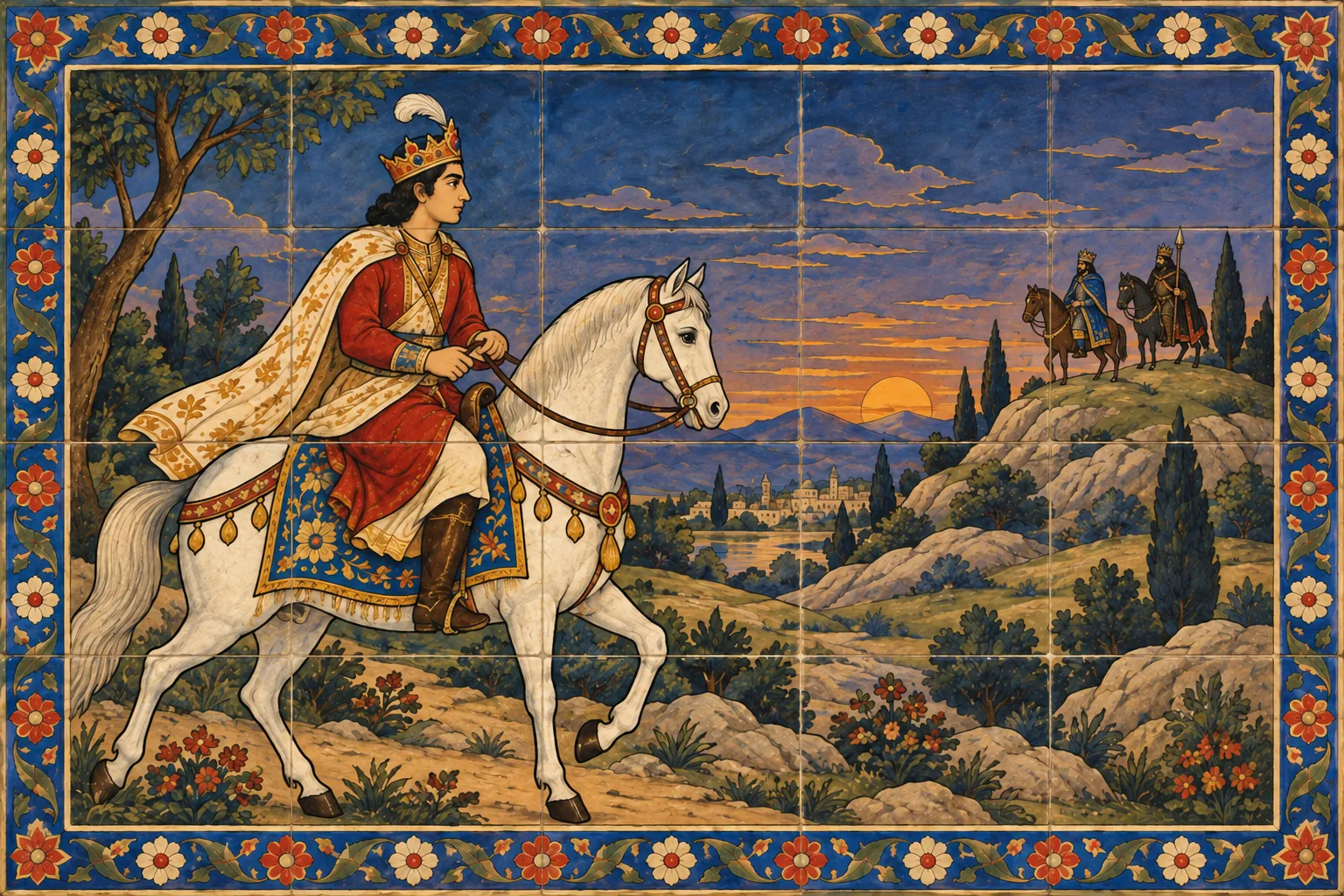
Salm wrote to Tur, and Tur agreed with every word. Together they sent their father a letter. Why, it asked, had the youngest been given the best part of the world? Iraj must give up the crown, or there would be war.
Fereydun was ready to fight. Iraj was not. No throne, he said, was worth his brothers' blood. He rode out to them alone, without a sword, to give them the crown himself.
They did not want it from his hand. Tur struck him down where he stood, and the two brothers sent his head home to their father.
Seven. The crown comes home
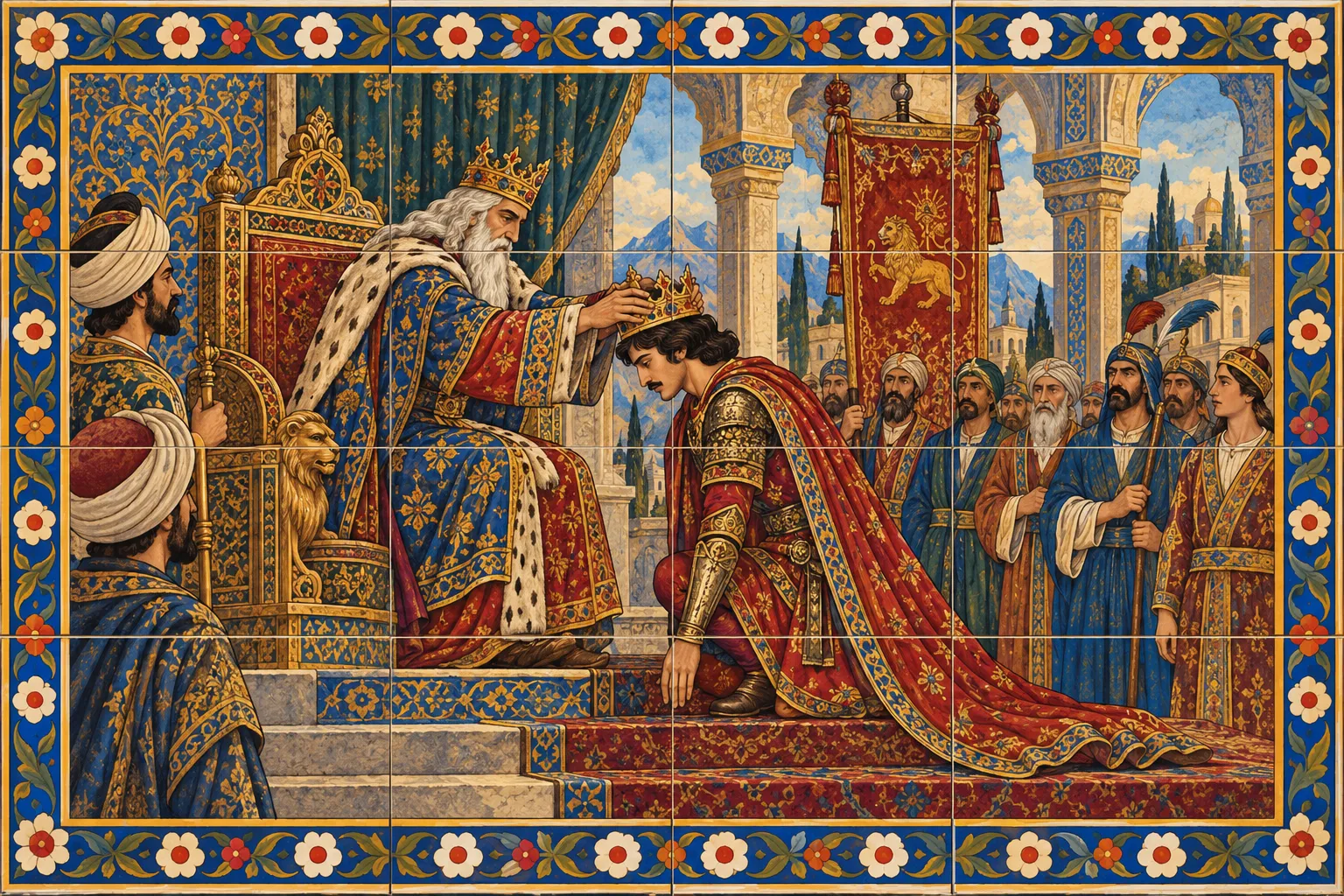
Fereydun wept until he lost his sight. But after Iraj's death a daughter was born in his house, and in time she had a son, Manuchehr. The old king raised the boy himself and taught him everything a king must know.
When Manuchehr was grown, he led the army of Iran against Salm and Tur. Kakui, a grandson of Zahhak, rode out to fight for Salm and was killed. Tur fell, and then Salm. Manuchehr came home, and Fereydun placed Iraj's crown on his head with his own hands. Not long afterwards, the old king died.
That is the story. The game tells it between rounds: in your first four games against the bots, and whenever a table stops for tea. Its paintings never show a death, and neither do these.