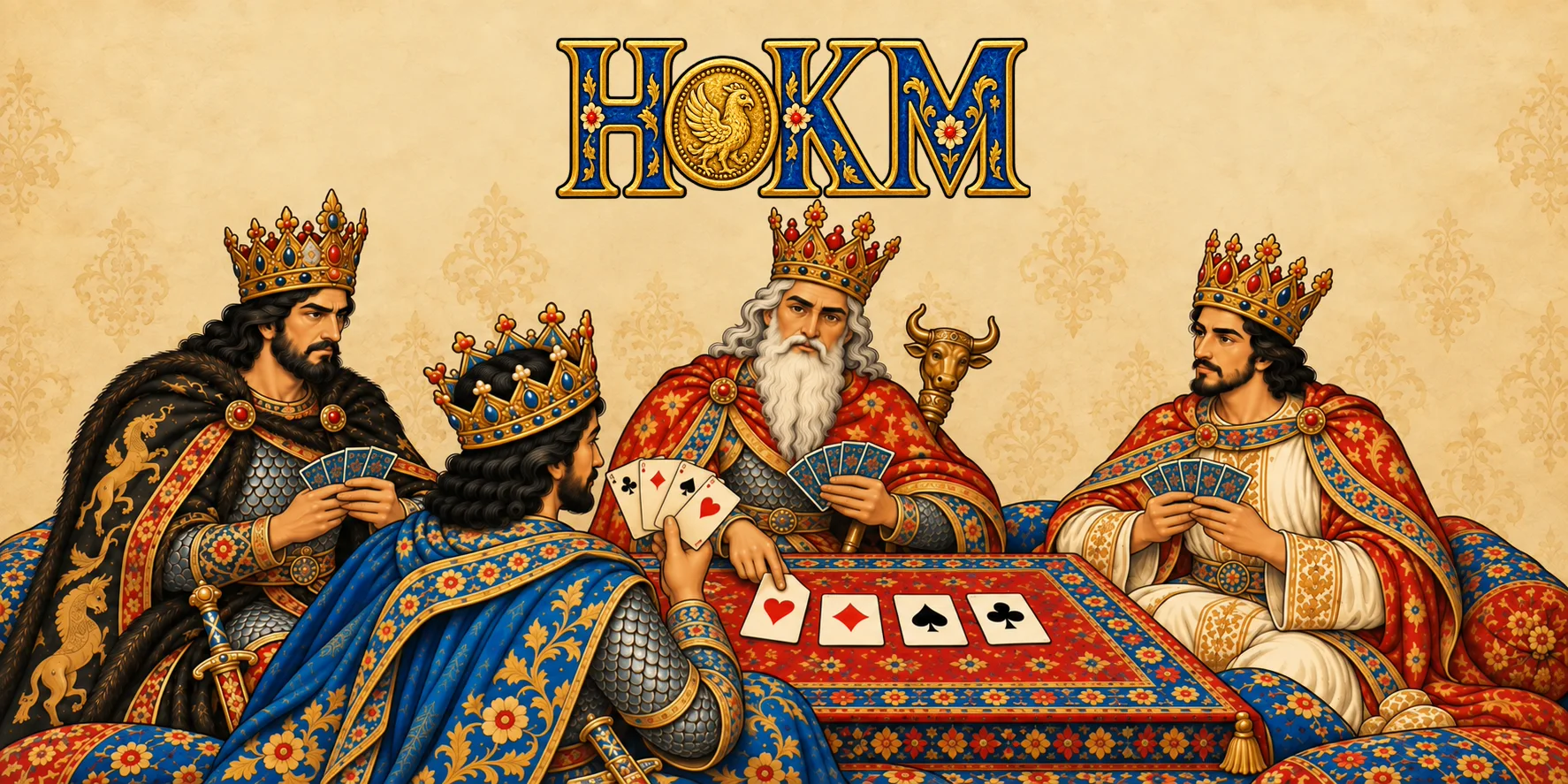
Iran's trick-taking card game, painted like the Shahnameh. Call hokm and win.
Coming soon to Android
Leave your email address and we will write to you the day it comes out.
We keep your address only to tell you when the game is out. Privacy
What hokm is
Hokm is the card game Iran plays. Four people sit around a table, partners facing each other, with one ordinary pack of fifty-two cards. One of them is the hakem, the one who rules. The hakem looks at five cards and names a suit. For that round, that suit is the hokm, and it beats every other.
The rest is easy to explain and hard to do well. If you hold the suit that was led, you must play it. If you do not, you may cut with a hokm card. The first side to take seven tricks wins the round, and seven rounds win the game.
This hokm is painted the way coffeehouse painters used to paint the Shahnameh, and its four suits are the four houses of one family from that book.
Four suits, four houses
Fereydun freed the world from a tyrant and, in his old age, divided it between his three sons. Salm got the west and Tur the east. Iraj, the youngest, got Iran and the crown. His two elder brothers could not bear it. The pack is that quarrel: red for Fereydun and Iraj, black for Tur and Salm.
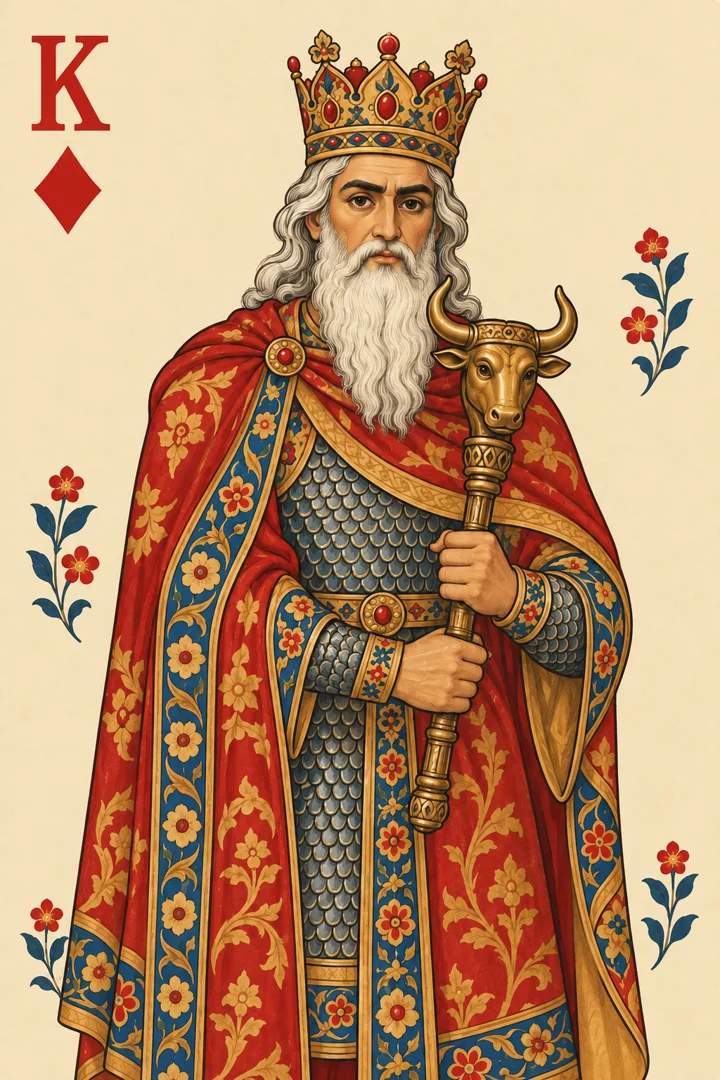
Diamonds. The old king, with his ox-headed mace.
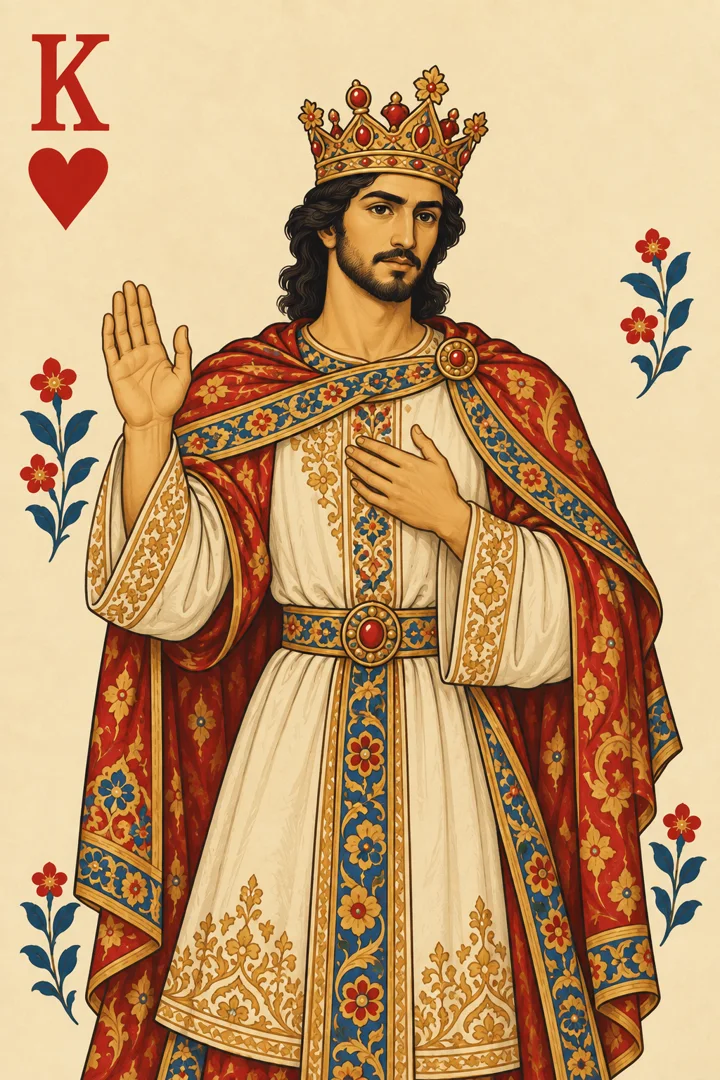
Hearts. The youngest son, who was given Iran.
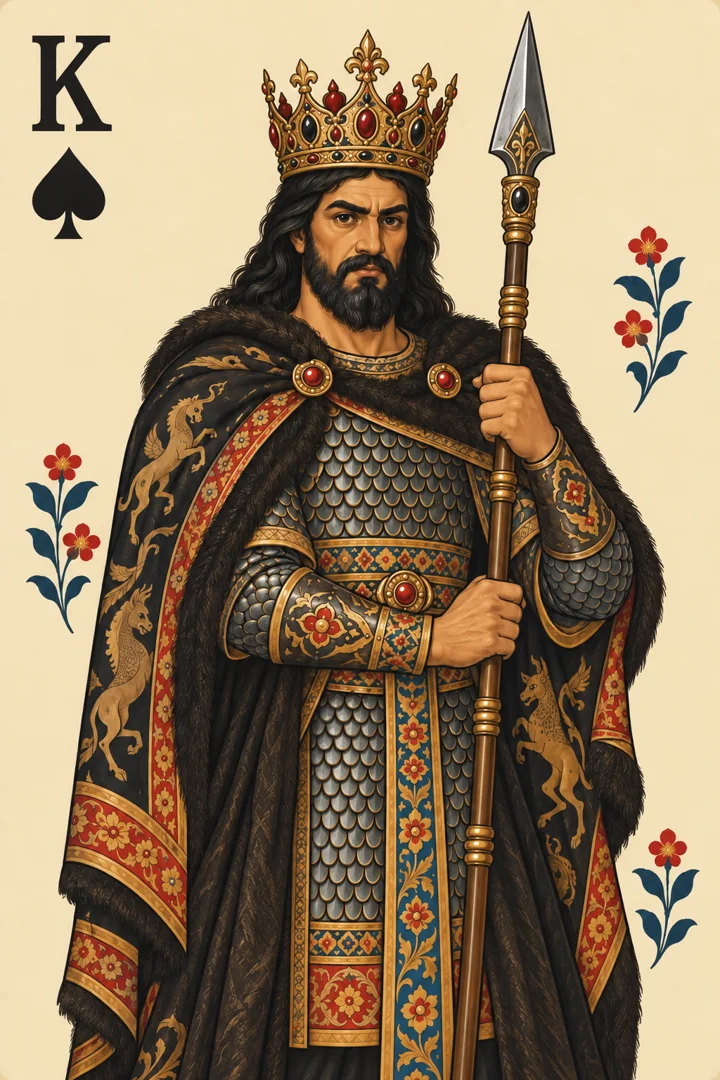
Spades. The second son, king of the east.
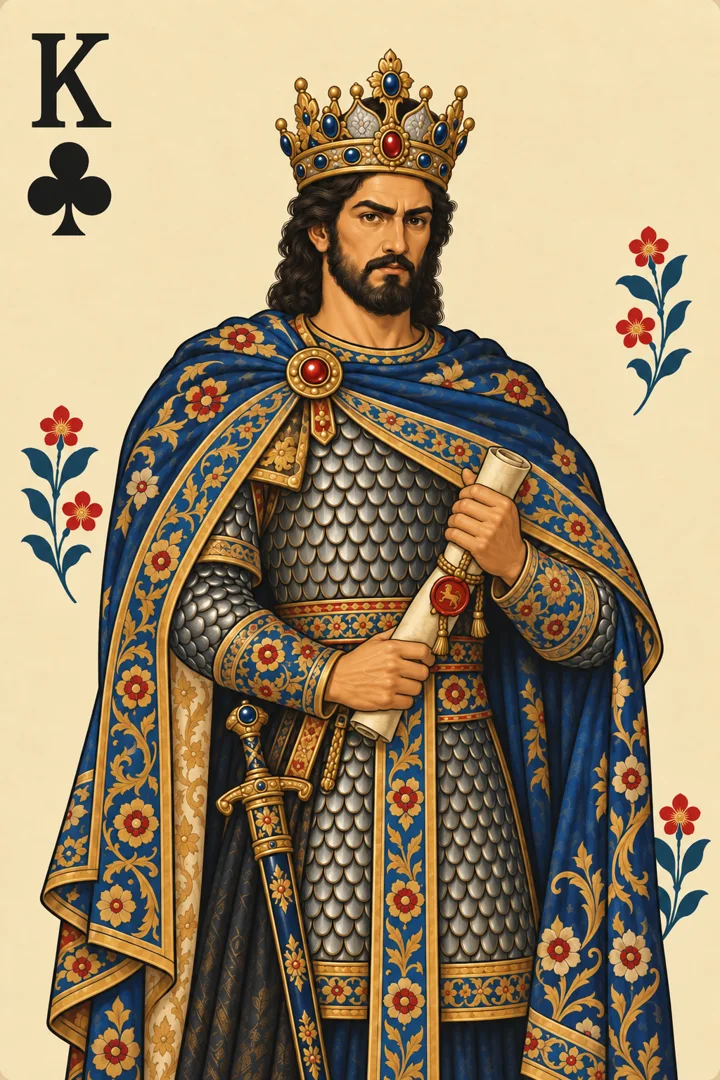
Clubs. The eldest son, king of the west.
How a round goes
First, the hakem
When a game begins, cards are turned up one by one around the table. Whoever gets the first ace is the hakem, and stays the hakem for as long as their side keeps winning rounds.
Five cards, then the call
Everyone is dealt five cards. The hakem looks at their five and calls the hokm. Then the other eight cards are dealt, four at a time.
Follow suit
The hakem leads, and play goes to the right. If you hold a card of the suit that was led, you must play it. If you have none, you may cut with a hokm card or throw away any other card.
The biggest card takes the trick
The biggest card of the suit that was led takes all four cards. If anyone cut, the biggest hokm card takes them instead. Whoever takes the trick leads the next one.
Seven tricks, then seven rounds
The first side to take seven tricks wins the round. Take all seven while the other side takes none and it is a kot, which counts as two rounds, or as three if the losers are the hakem's own side. Seven rounds win the game.
Never played? Start at the school
Nine short lessons take you from never having held a card to calling hokm yourself: what the pack is, which card is bigger, who your partner is, what a trick is, and so on, up to a small game of your own. Fereydun himself teaches, and you sit in Iraj's seat.
After the school, your first four games are against the bots, one in each house. Between rounds they tell Fereydun's story, a chapter at a time. You can switch the story off.
Play the way you like
Online
Sit down with three other players at a table played for coins. There are three halls, the teahouse, the caravanserai and the palace, each with a higher price for a seat than the last.
In this room
Four phones on the same Wi-Fi make a table. It needs no internet, and a bot fills any empty seat.
Alone
Against the bots, with no internet, as often as you like.
Circle
A group of your own, with private tables, its own ranking and a place to chat.
Tournament
A knockout, all the way to the crown. Each one starts at a set time.
Friends
Add a friend with a code and send each other messages. You can block or report anyone who bothers you.
At the table
Throw something
A tomato, a slipper or a rose, thrown at another player's portrait. No one is told who threw it.
Ask for tea
If no one at the table objects, the game pauses after the trick and the storyteller tells the next chapter.
Coming early
Sure of your card? Once the trick has been led, you can lay it face down before your turn. When your turn comes, it turns over by itself.
Leading a run
Holding the ace, king and queen of one suit? Lead all three at once and let the others answer them one at a time.
The partner's middle
The hakem can leave the call to chance. The third card dealt to the hakem's partner is turned face up, and its suit is the hokm.
A fair deal
The pack is shuffled with a number that all four players have a hand in. When the round ends, every phone deals it again to check.
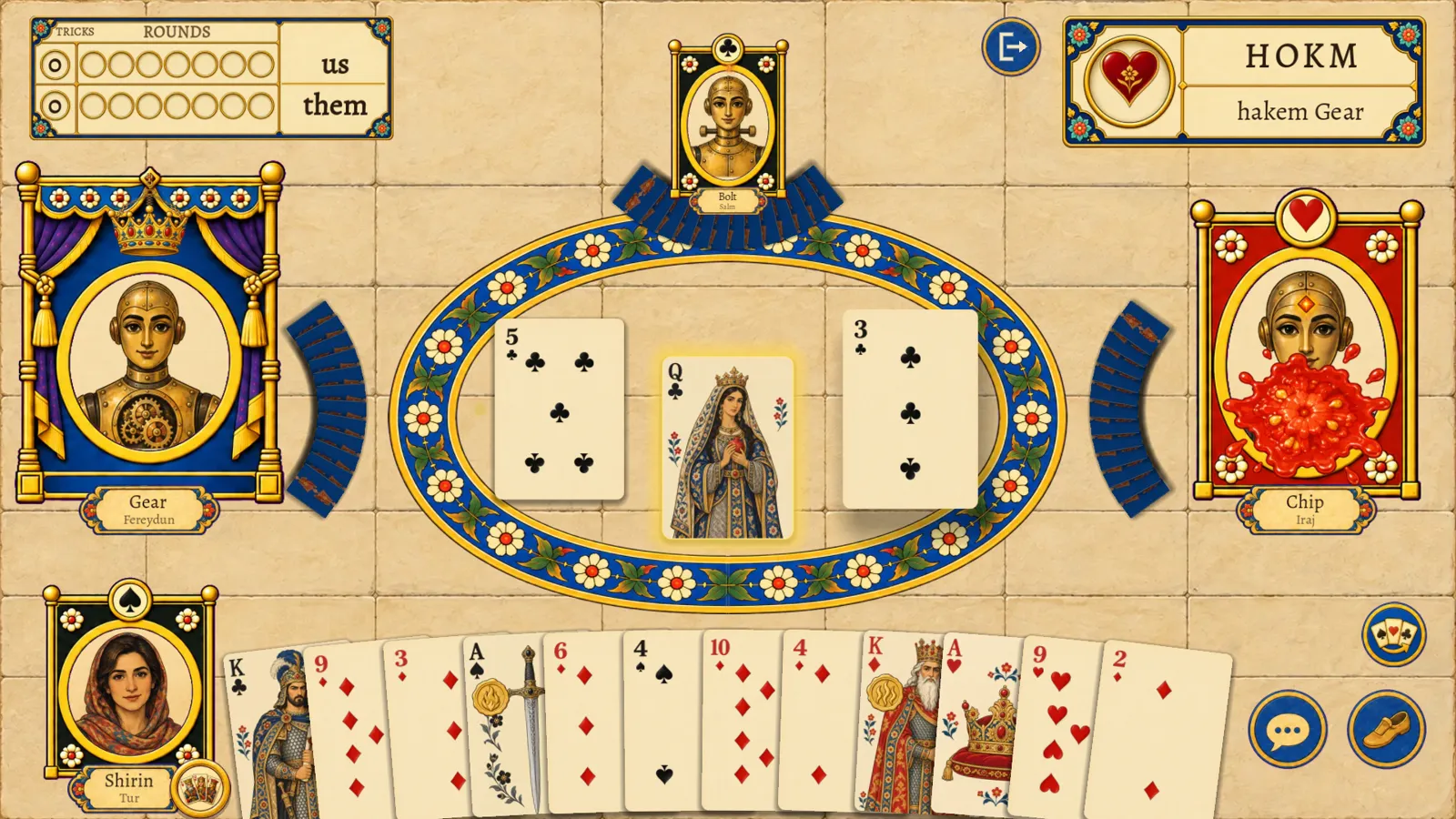
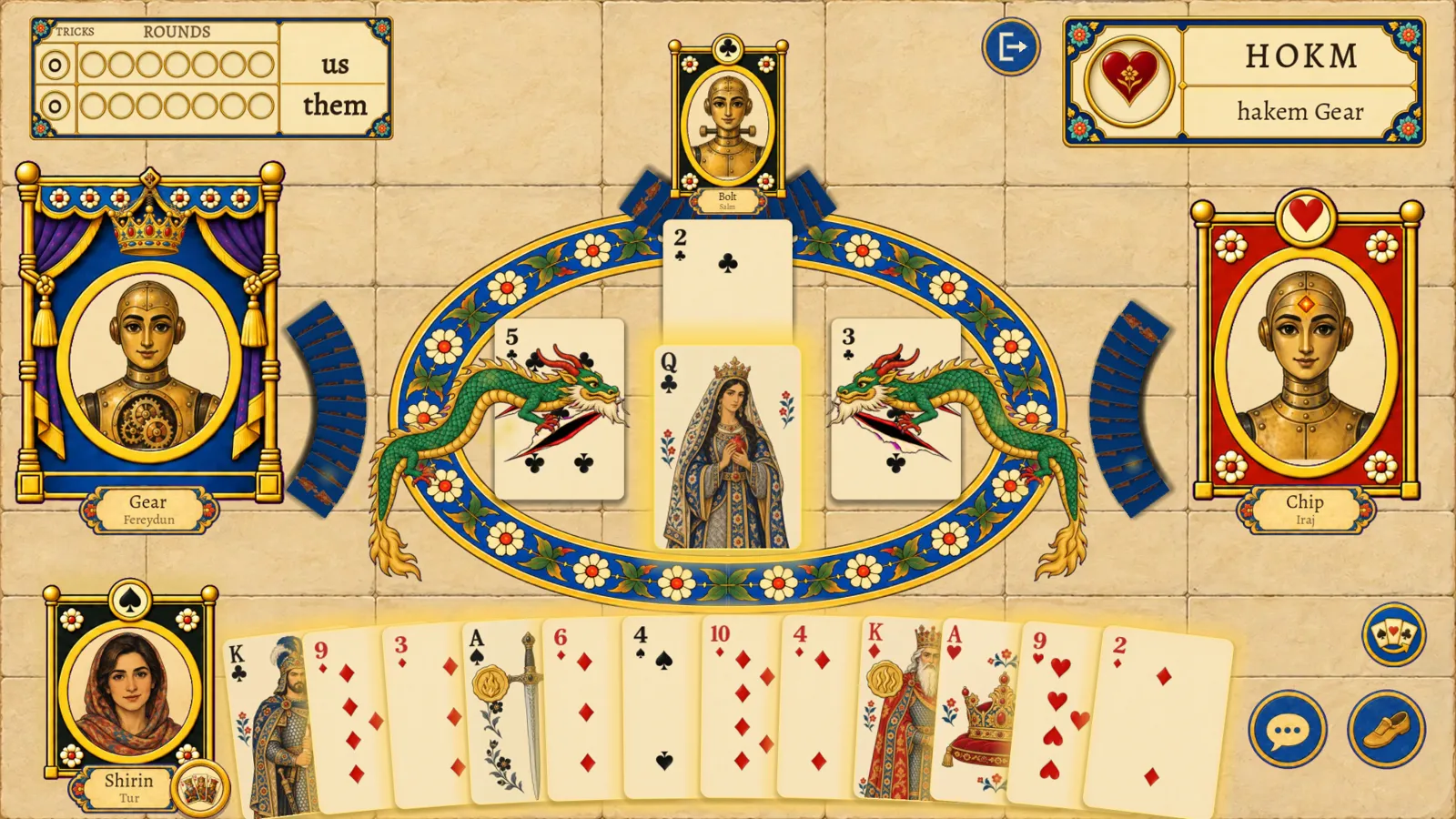
Yours to keep
There are sixty card backs from twelve painted worlds, along with tables, thrones for the hakem, faces, and effects for the cut, the win and the loss. You get them from chests and from the bazaar, with coins you win at the table. Before you open a chest, it tells you what is inside and what the chances are.
Coins are only for playing. They can never be exchanged for money, and the game has no adverts.
From Footman to King
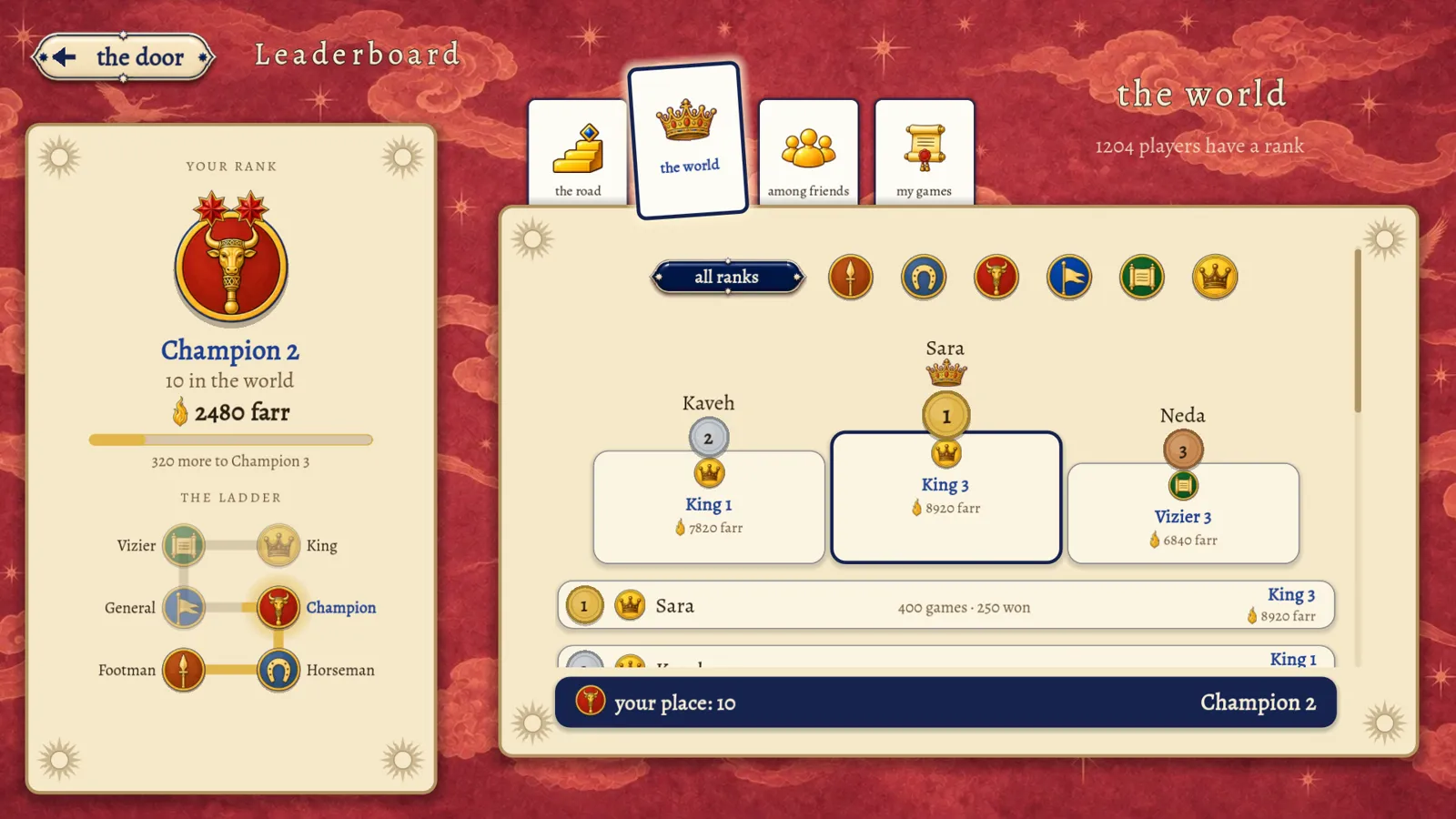
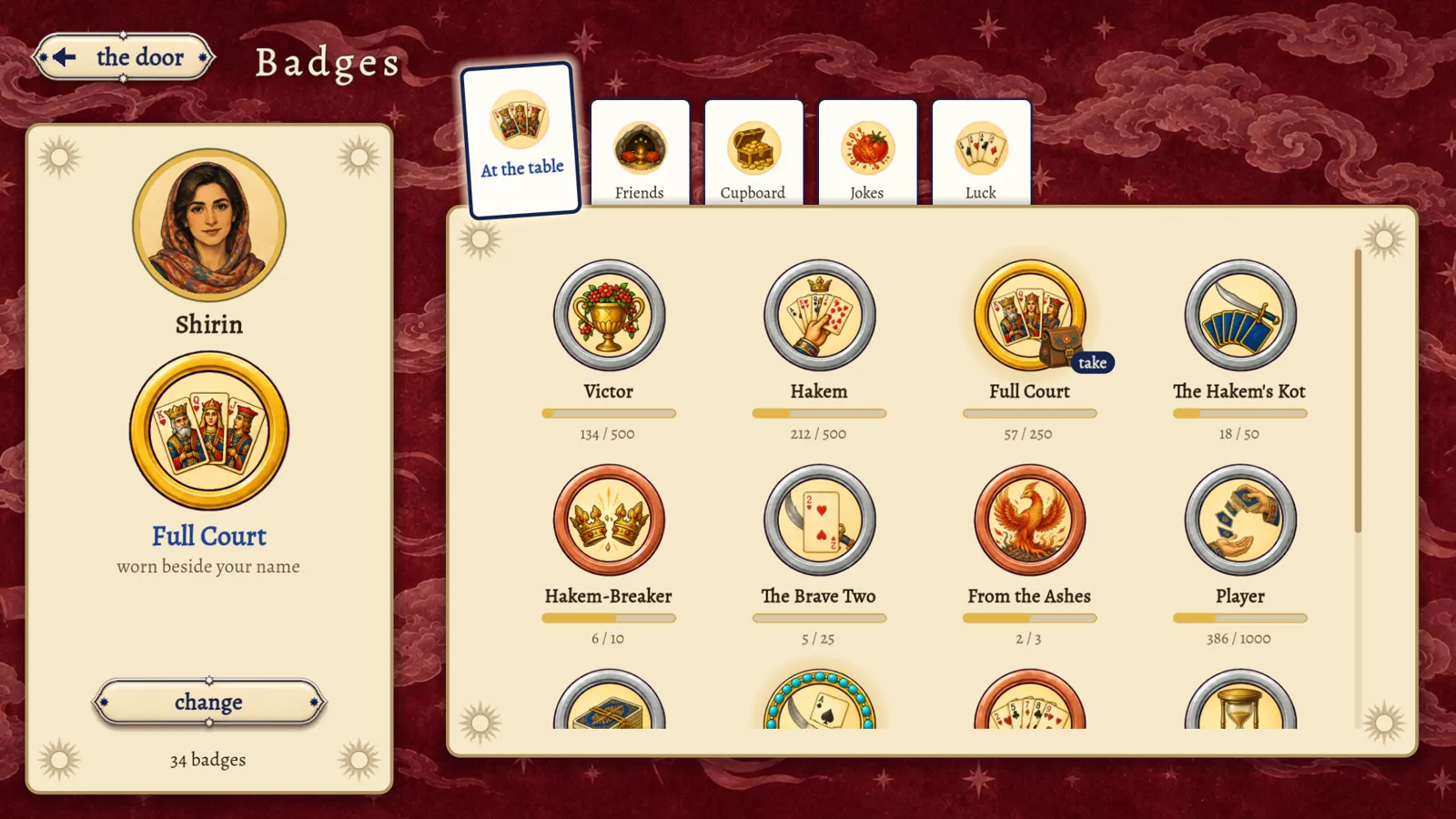
Your farr, the glory the old kings were said to carry, rises and falls with every coin game. Eighteen steps lead up from Footman through Horseman, Champion, General and Vizier to King, three to each rank. You earn badges in copper, silver, gold and turquoise for what you do at the table, and every day brings new decrees to carry out for coins.
The story the cards tell
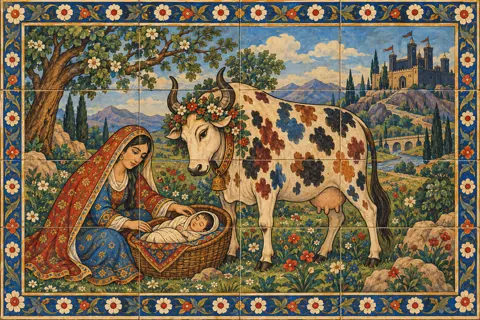
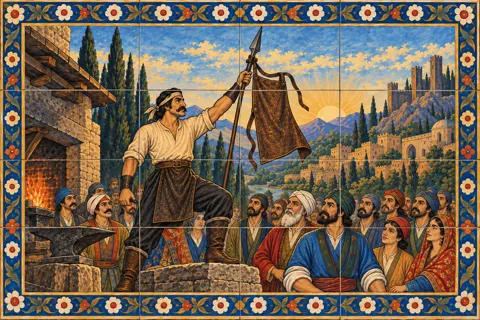
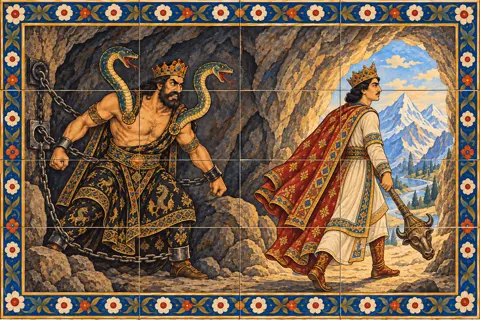
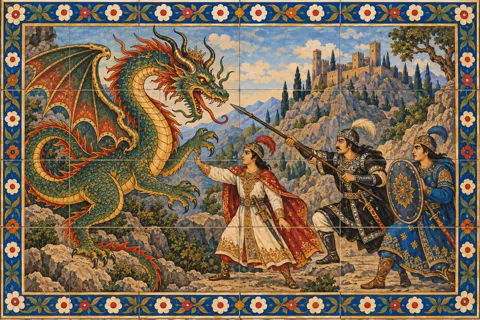
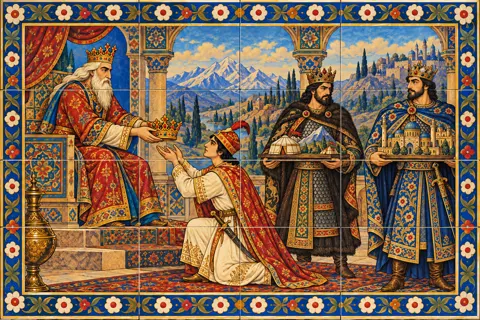
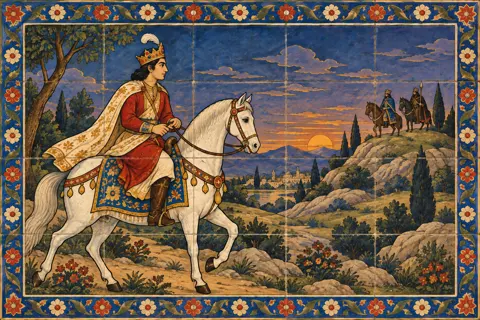
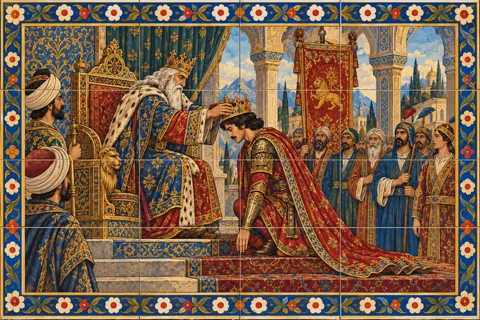
Seven chapters, from a baby hidden in a meadow to a crown placed on a grandson's head. The game tells them between rounds. You can read them all here.
Questions
Is it free?
Yes, and there are no adverts. Coins are only for playing and never turn into money.
Do I need an account?
No. You can play alone, or with people in the same room, without one. To play online, the game sets up a guest account for you. If you want your coins and rank on another phone, sign in with your email address and a six-digit code. There is no password.
Which phones?
Android 7 and later, to start with. A version for computers, on Steam, will follow.
Which languages?
English and Persian, and the game is built so that more can be added.
How old do I have to be?
Eighteen or over.
Where do I ask for help?
In the game, ask Sorush, our helper. If he cannot answer, a person takes over. Outside the game, write to hello@goud.games.